The True Price Standard is a necessary condition to put true prices into practice. The Standard ensures that there is a consistent, transparent way of calculating and implementing true price. The calculation method is regularly updated based on the most recent scientific insights. True Price Foundation makes the methods available to researchers and professionals who want to adhere to the method and apply true pricing in practice.
How is a true price calculated?
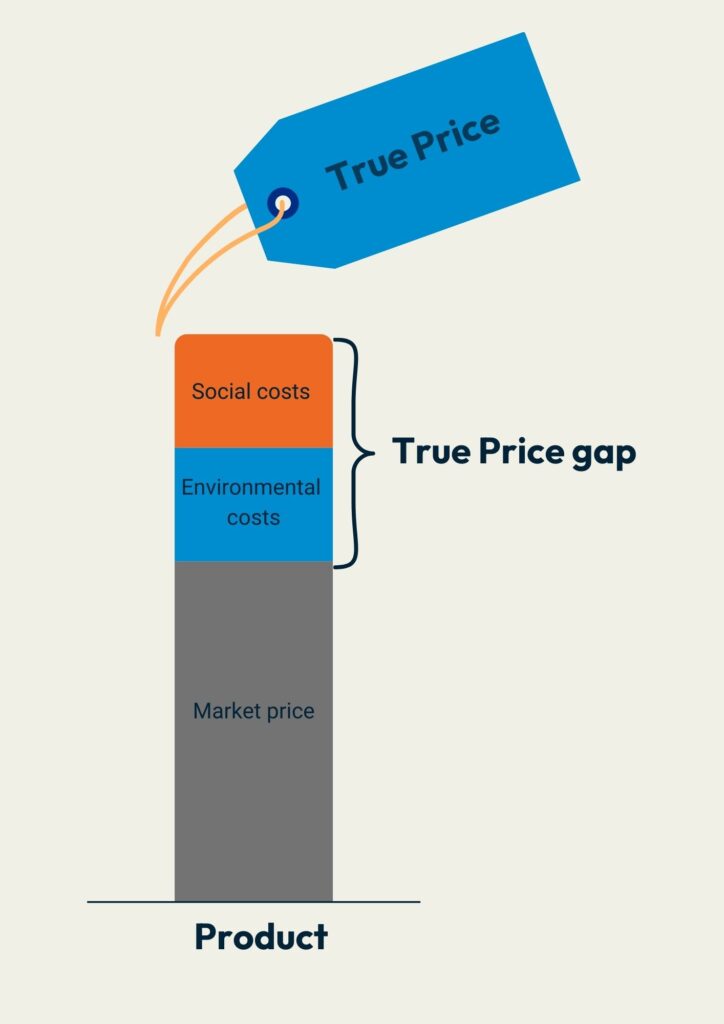
The true price is the sum of market price, social costs and environmental costs of a product. An assessment includes measuring and valuing many aspects, including among others, climate impact, water use, biodiversity and pollution costs, as well as workers below living wages, farmers below living income, risks of labour and human rights infringements in the value chain.
A True Price Assessment has 5 steps that can be applied to any type of product or service.
Five steps of a True Price Assessment
- Define the intended goal and audience
- Carry out a hotspot analysis and determine the value chain steps and impacts to take into account
- Collect data to quantify the set of relevant indicators, making sure data quality fits the intended goal and materiality
- Apply monetisation factors and determine the true price gap of the product
- Interpret and improve the results, and report on the assessment