


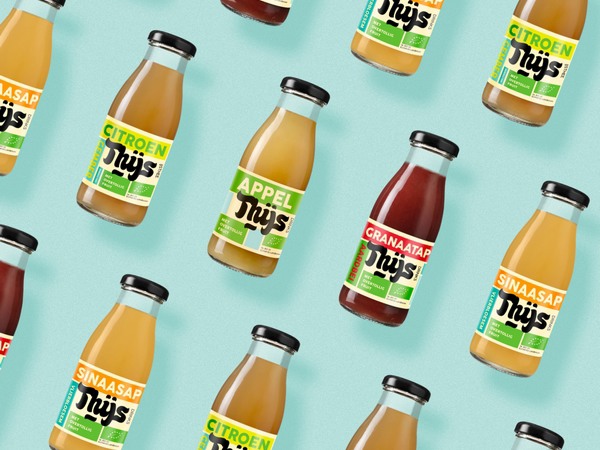
Thijs drinks wants to contribute to a more sustainable world with fresh drinks made from excess fresh fruit. It has asked True Price to estimate the hidden costs (also called: true price gap) of 3 drinks. With this, Thijs creates insight into the external costs of their drinks, as a first step to structurally reduce them.
About the project
The results represent true price gap estimations per bottle (€/bottle) for 8 impacts. They cover the cultivation of ingredients, transport and mixing of the drinks. The results are based on the average impact per ingredient or sector, per country.



Products
- Apple
- Orange-elderflower
- Ginger-lemon
Approach
How did we estimate the true price gaps?
The true price gaps are based on the True Price Method. The scope is based on materiality and feasibility assessments. They cover a substantial part of the complete true price gaps. All scoping considerations have been discussed and aligned with the project partners.

Value Chain Steps
The estimates cover material parts of the value chain per stage
- Cultivation
- Transport & shipping
- Brewing

Impacts
The estimates cover 8 material social and environmental impacts
- Contribution to climate change
- Water use
- Water pollution
- Land use
- Air pollution
- Use of scarce materials
- Poverty
- Child labour

Data
The results are based on secondary data and represent the average impact per ingredient or sector, per country.
The Results

The results show significant differences between the drinks. The social externalities of the apple drink are small compared to the other drinks. In just one drink, ginger-lemon, child labor is significant. A similarity between the drinks is that a majority of the impact takes place in the cultivation phase. This indicates that most sustainability can be achieved in that phase. Air pollution is relatively high in all beverages. This is driven by the relatively high social costs of air pollution in countries such as China and Germany, where high levels of pollution lead to health costs, among other things.
Good to know…
Review process
The review process in this project covers the process, scoping, modelling, data, and reporting steps of a true price assessment, following the assessment guide. One general validation round on process and the model as a whole has been executed by a team member not involved in the project.
All validation remarks, questions, and comments have been noted. They have been processed by the project team. The processing has been checked by the validators. Moreover, all steps, choices, and assumptions have been discussed and signed off by the client.
Limitations of the results
Due to limitations in resources, choices and assumptions had to be made. These have been discussed with and signed off by the client. These results reflect true price gaps with a limited scope. The following limitations should be considered:
- Impacts: not all True Price impacts are included. The addition of more impacts, like soil pollution, could provide further insights.
- Lifecycle steps: several lifecycle steps, such as packaging, are not included in the analysis.
- Data: the results are based on secondary data sources and represent country averages.