


Vermaat is one of the largest catering and food service companies in the Netherlands and a leader in true pricing. In 2022, Vermaat conducted a three-month pilot project in 13 company restaurants across the Netherlands to test true pricing.
The goal was to gain experience and understand how true pricing can add value to their sustainability efforts. The pilot focused on three popular products: a boiled egg, a croissant, and a glass of skimmed milk. Based on the success of this initiative, Vermaat has decided to launch a new true pricing project in 2024, expanding to include more locations, products, and ingredients, aiming for a more comprehensive implementation of true pricing in their operations.
About the project
Vermaat aims to support a sustainable future by reducing its environmental footprint, minimizing food waste, and contributing to the protein transition. True pricing is seen as a key tool in achieving these sustainability goals. Following the successful pilot in 2022, Vermaat is expanding the true pricing project to include a range of products such as tuna sandwich, vegetarian sandwich, a vegetarian and beef kroket, and coffee with cow milk and oat milk. This initiative aims to provide deeper insights into the true cost of food, helping Vermaat refine its sustainability practices and align with its long-term ambition to integrate true pricing into as specified on its Food Vision 2027 (click here for more information). On this page, you will find all relevant information about the true price gap calculations. This page is intended for visitors of the participating company restaurants and other interested parties.
Products
We have supported Vermaat in calculating the social and environmental externalities (true price gap) of 11 distinct products — encompassing 35 ingredients!
The analysis on this webpage provides insights on three product comparisons: tuna sandwich versus vegetarian sandwich, vegetarian versus beef kroket, and cow’s milk versus oat milk cappuccino. A product choice such as the tuna sandwich is highly relevant, as the Visbureau reported that in 2022, the average Dutch person consumed 9.5 kilos of fish, with tuna being one of the top five (Visbureau, 2022). This statistic not only exceeds that of the previous year but also indicates a growing trend in fish consumption, making it highly relevant from both a supplier and true price perspective.
This section highlights the true price gap results and analysis for each type of impact (social and environmental). We emphasize the differences between what are typically viewed as more sustainable and less sustainable options, followed by an analysis of ingredients with the highest materiality and a detailed examination of the product-specific results.
Approach
How did we estimate the true price gaps?

Value Chain Steps
The estimates cover material parts of the value chain per stage
- Raw materials for cultivation
- Cultivation (on farm)

Impacts
The estimates cover material parts of the value chain per stage
- Contribution to climate change
- Land use
- Use of scare materials
- Poverty (underpayment and underearning)
- Child labour
- Air pollution
- Water pollution
- Water use

Data
The estimates cover material parts of the value chain per stage
- Primary data collected on the farm
- Secondary data collected by True Price
- True Price monetization factors
As with all research, the results have limitations. Feel free to check them here.
The Results
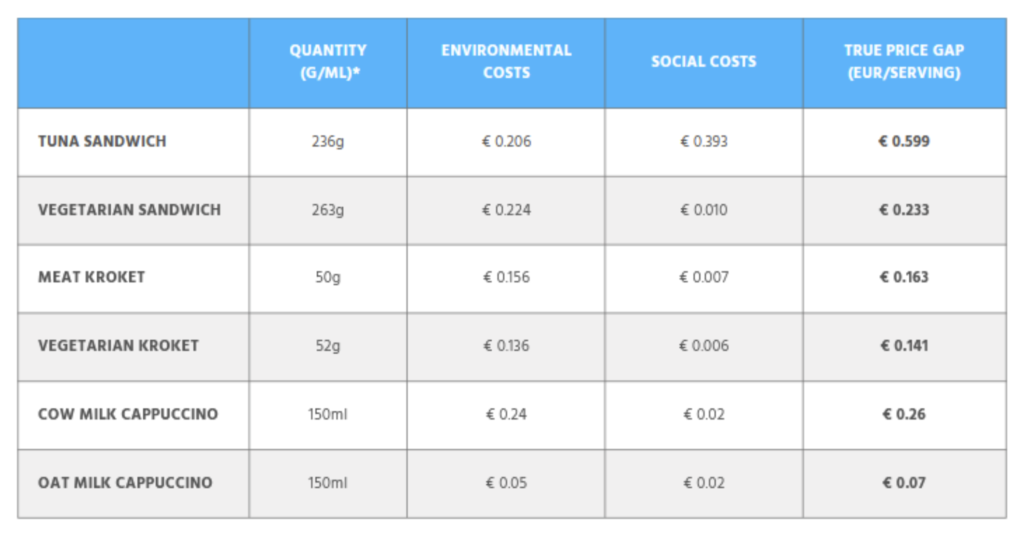
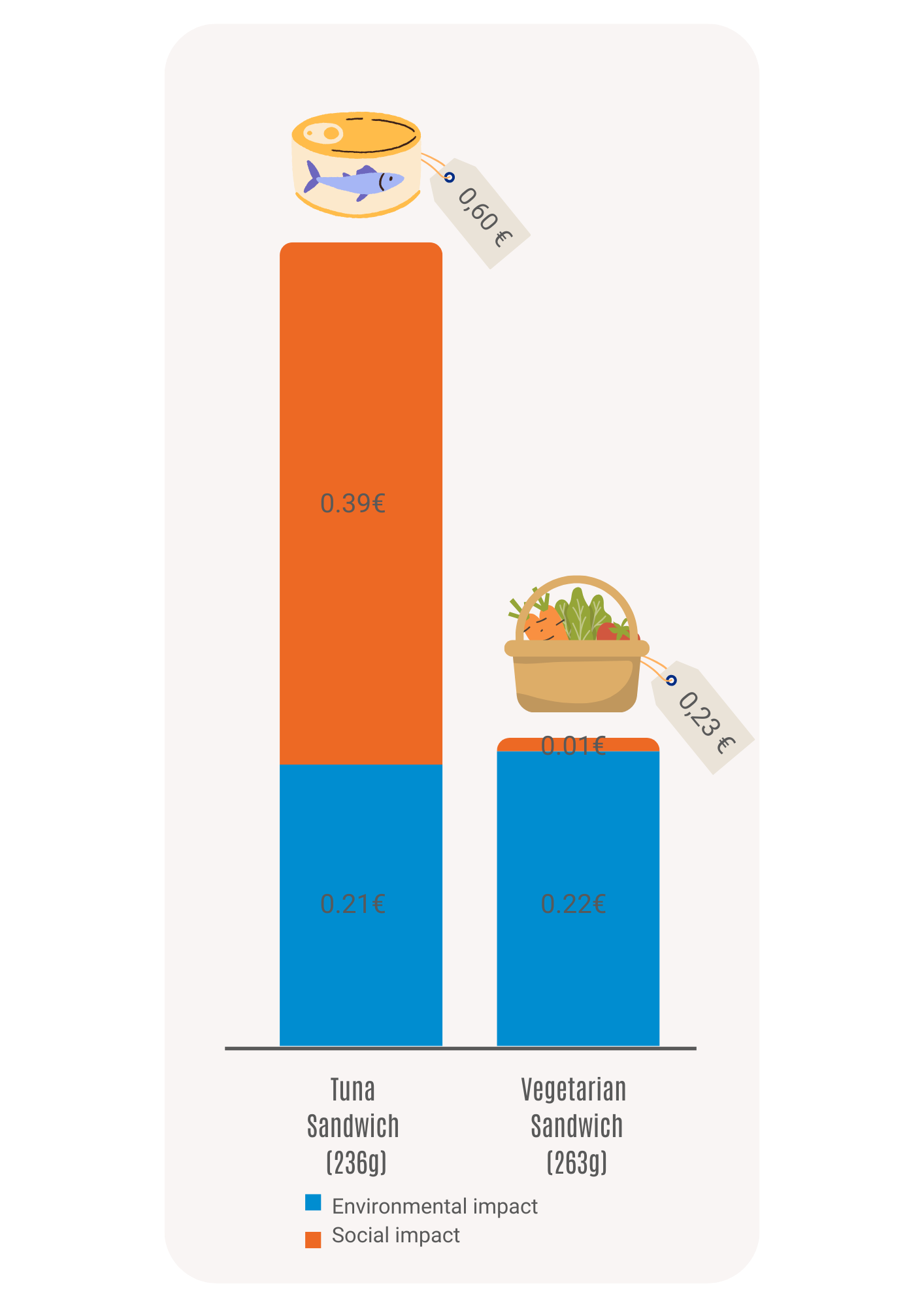
Tables below outline the true price gap estimates for the products included in the project. They do not reflect the exact suppliers of Vermaat but rather provide a high-level estimate of the social and environmental costs of the ingredients supply chains and respective countries of origin. The product with the highest true price gap was found to be the tuna sandwich (find the detailed cost-per-ingredient breakdown below).
Comparisons
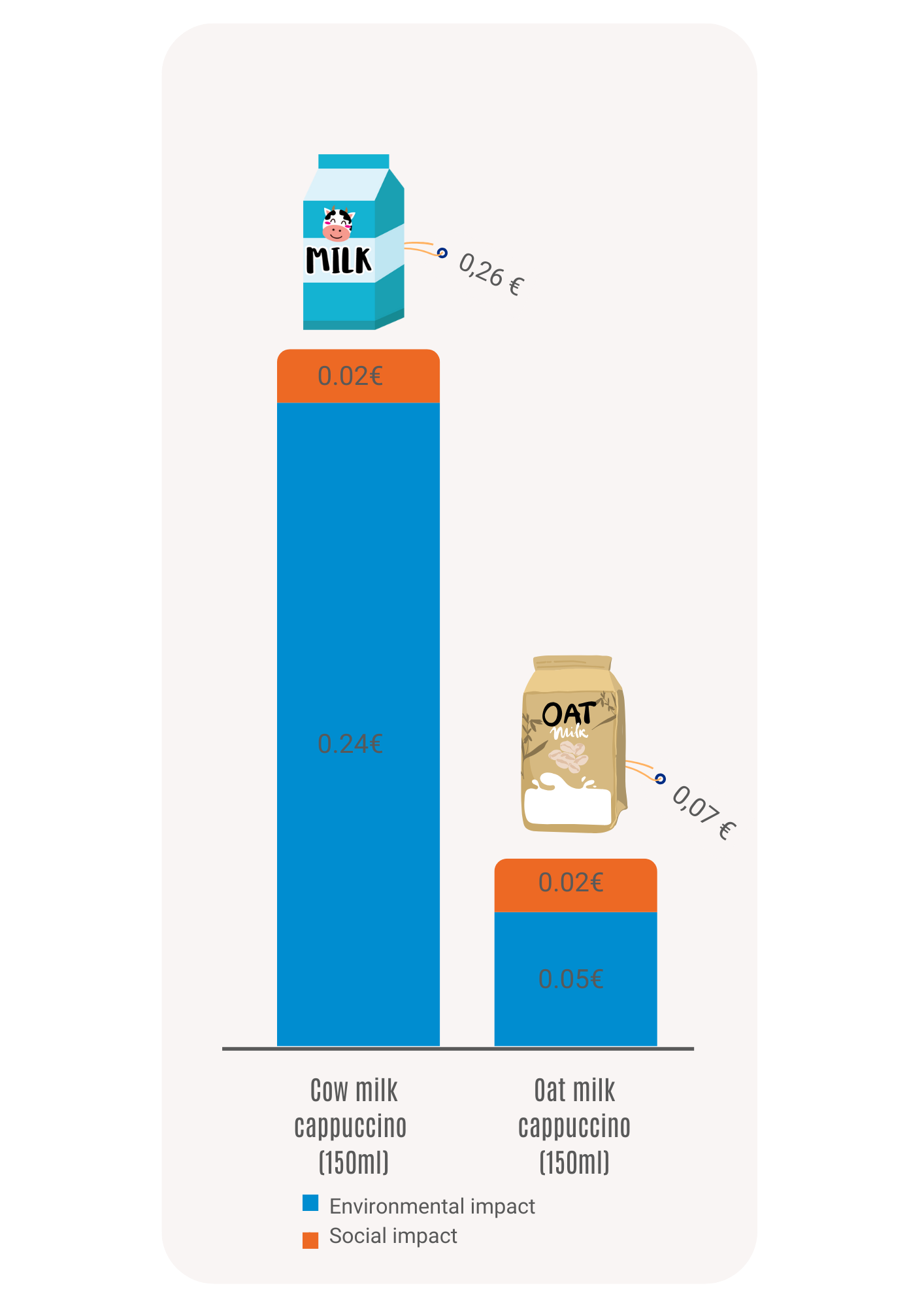
Cow milk and oat milk cappuccino
The primary social cost driver for both cappuccinos is underpayment. For the cow milk cappuccino, underpayment (41%) stems mainly from smallholder coffee farmers. Secondary data indicate that Honduras has the most significant gap in living income for coffee farmers. Environmental costs for the cow milk cappuccino are mainly due to air pollution (55%) and contributions to climate change (21%). The high true price gap for cow milk is linked to its significant environmental impacts, particularly ammonia (NH3) emissions.
Regarding the oat milk cappuccino’s social costs, underpayment (50%) is also the largest contributor, primarily from coffee production. The largest environmental cost contributors for the oat milk cappuccino are land occupation (46%) and contributions to climate change (27%). The production of oat grains, particularly land use, plays a significant role in these environmental impacts.
FAQ
Why are the social costs of beef croquets and vegetarian croquets the same?
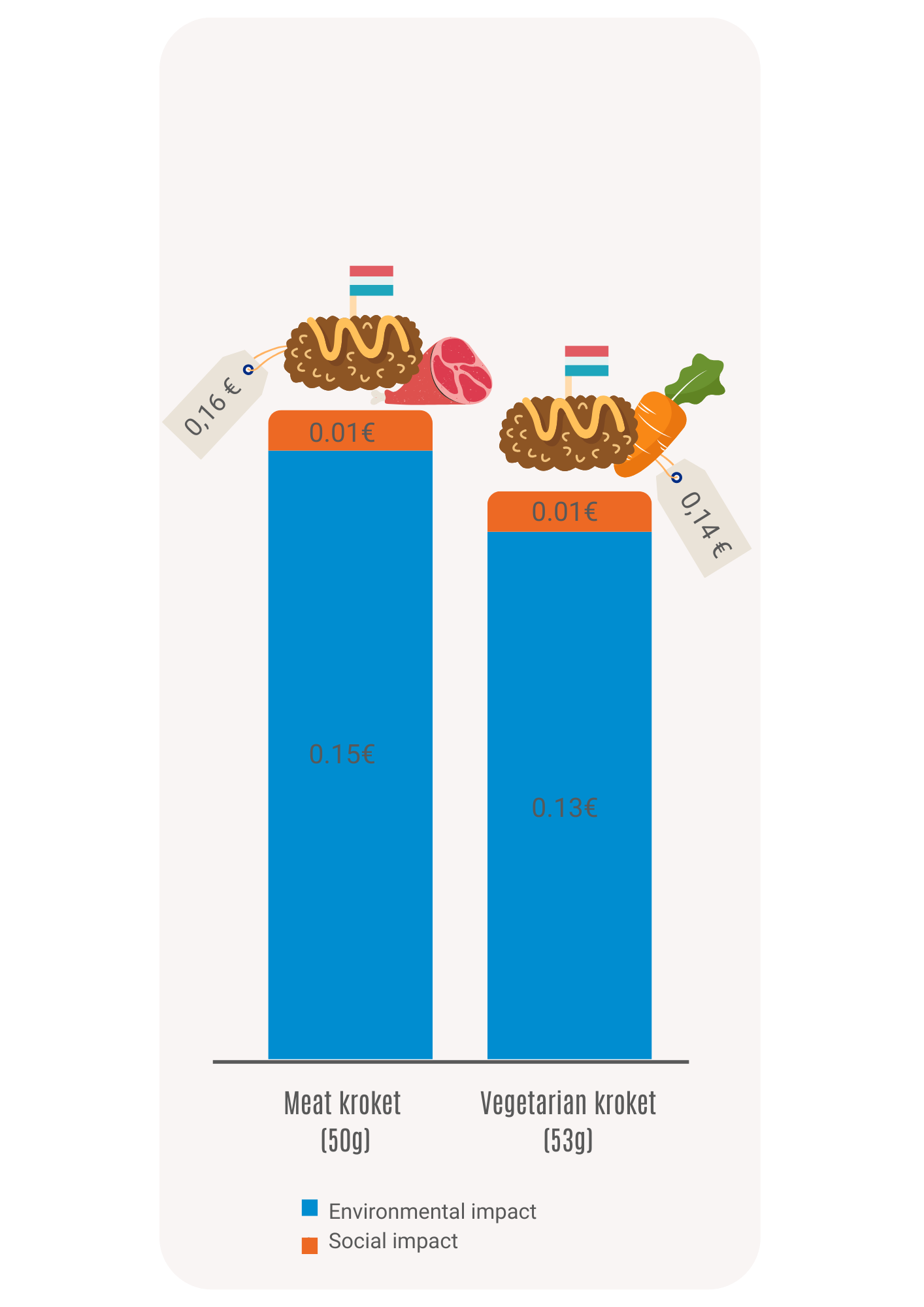
On one side, the majority of ingredients of the beef croquets are sourced from the EU/US, so the social costs associated are relatively small. Plus, as this project only focuses on impacts at the farm-level, other risks occurring at other stages of the value chain (for example during meat packaging) are out of scope. On the other hand, both the meat and vegetarian kroket contain palm oil, and the underearning impact of this ingredient is out of scope. Consequently, the social impact of both type of croquets may be underestimated.
Why is the environmental costs of vegetarian croquets so high?
Vegetarian wire meat (dehydrated egg whites), significantly increases air pollution and land occupation due to chicken farming for egg production. Consequently, the vegetarian kroket has a great air pollution impact, even larger than the beef alternative.
How come products with beef and other animal-sourced foods in their recipes tend to have a high environmental impact?
Beef production leads to a really high contribution to climate change, land use, and air pollution.
What makes cow milk production so harming for the environment?
The farming of milk cows has a higher true price gap largely because of its high environmental impacts linked to ammonia (NH3) emissions.
What is the main externality created by oat milk production?
The main externality of oat milk production is land occupation (0.012EUr/serving 130ml), however this is less than half compared to cow milk land occupation costs (0.026 EUR/serving 130ml).
Vermaat and True Pricing
About Vermaat
Vermaat is a leading hospitality company in the Netherlands, specializing in tailor-made food and beverage solutions. Founded in 1978, Vermaat has grown to operate over 350 locations, including company restaurants, museums, hospitals, and airports. The company is dedicated to sustainability, innovation, and quality, focusing on reducing its environmental footprint and enhancing customer experiences. Vermaat collaborates with a wide range of partners to create unique culinary concepts that cater to diverse audiences while promoting responsible sourcing and sustainable practices.
For more information, visit Vermaat’s website.
Why did Vermaat choose true pricing?
Vermaat adopted true pricing to address the hidden costs in product pricing, such as environmental damage, CO2 emissions, and unfair labor practices. This approach helps Vermaat identify critical issues within their value chain, including child labor and water pollution. By understanding the specific impacts of different ingredients, Vermaat can adjust their suppliers and practices to be more socially just and environmentally sustainable. True pricing enables Vermaat to promote a fairer system and make sustainable production the norm, fostering greater accountability and transparency in their operations.
Where do the true price payment funds go?
Vermaat developed a remediation strategy and selected three organizations to transfer the True Price funds: Solidaridad, Good Fish, and Land van Ons. Each location of Vermaat can choose one or more of these three organizations as their remediation partner. As Vermaat is looking to contribute as well to reducing social and environmental externalities, not only customers are invited to pay the true price of their products, but Vermaat also donates 10% on top of each true price gap paid to the remediation partners.
Good to know…
Review process
The review process in this project covers the process, scoping, modelling, data, and reporting steps of a true price assessment, following the assessment guide. One general validation round on process and the model as a whole has been executed by an impact expert not directly involved in the project.
All validation remarks, questions, and comments have been noted. They have been processed by the project team. The processing has been checked by the validators. Moreover, all steps, choices, and assumptions have been discussed and signed off by the client.
Limitations of the results
Due to limitations in resources, choices and assumptions had to be made. These have been discussed with and signed off by the client. These results reflect true price gaps with a limited scope. The following limitations should be considered:
- Impacts: not all True Price impacts are included. The addition of more impacts, like air pollution, could provide further insights.
- Lifecycle steps: several lifecycle steps, such as packaging, are not included in the analysis.
- Data: primary data has been collected by a local team and verified by true price experts. This provides a substantial level of granularity.