


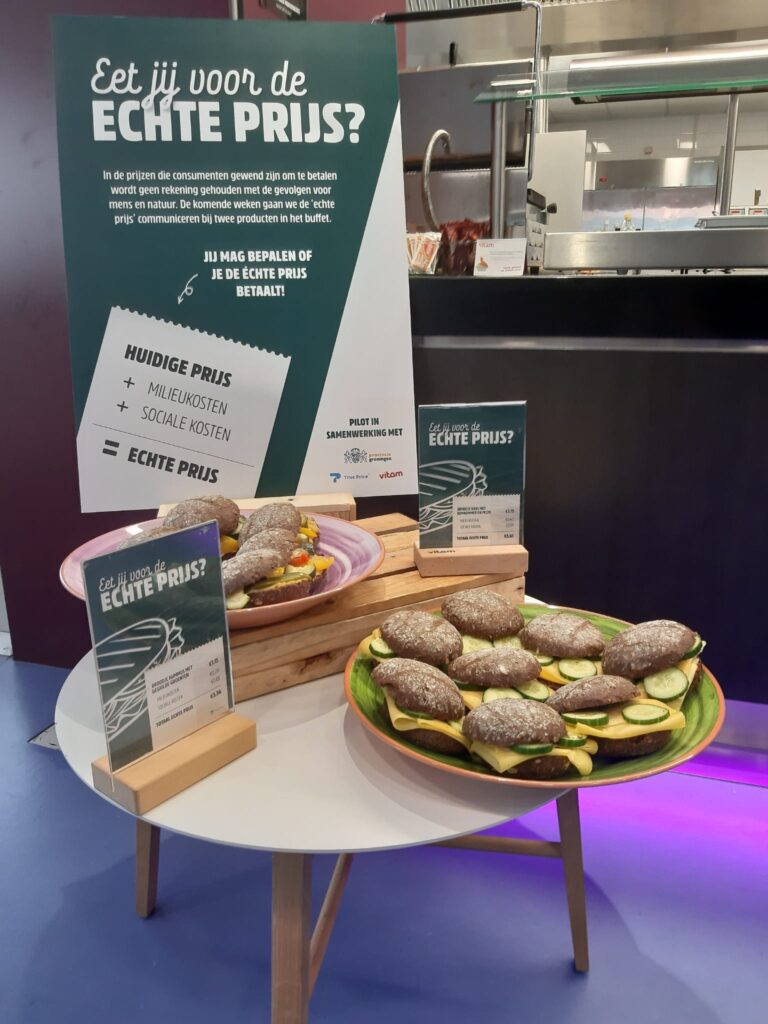
Vitam successfully embarked on its True Price journey in 2023. Now they are expanding True Pricing to more locations in the Netherlands with a wider range of products at real prices. Guests at various Vitam restaurants are now experiencing something unique: the real price of food and drink. Thanks to the collaboration between True Price and Vitam, they not only get delicious dishes, but also see the real impact of what they eat.
This is entirely in line with Vitam’s motto, “GOOD DOING FOOD.” Together, we are taking transparency about the real costs to people and the environment to a higher level. In this way, we are contributing to a fair and sustainable food chain.
About the project
The analysis we conducted for Vitam includes calculating the true price (the external costs) of 10 products. These 10 products consist of approximately 20 different ingredients. Some ingredients were left out of scope due to limited data availability and expected materiality. The true price includes nine impacts and focuses on the cultivation phase of the ingredients (see below).
The analysis is based on secondary data collected by True Price, supplemented with limited primary data collected by Vitam on the ingredients, countries of origin, and weights. The true price gaps are calculated using the True Price method, which offers a scientific, well-developed, and widely supported method for calculating true prices. More information about true prices can be found here.

Products
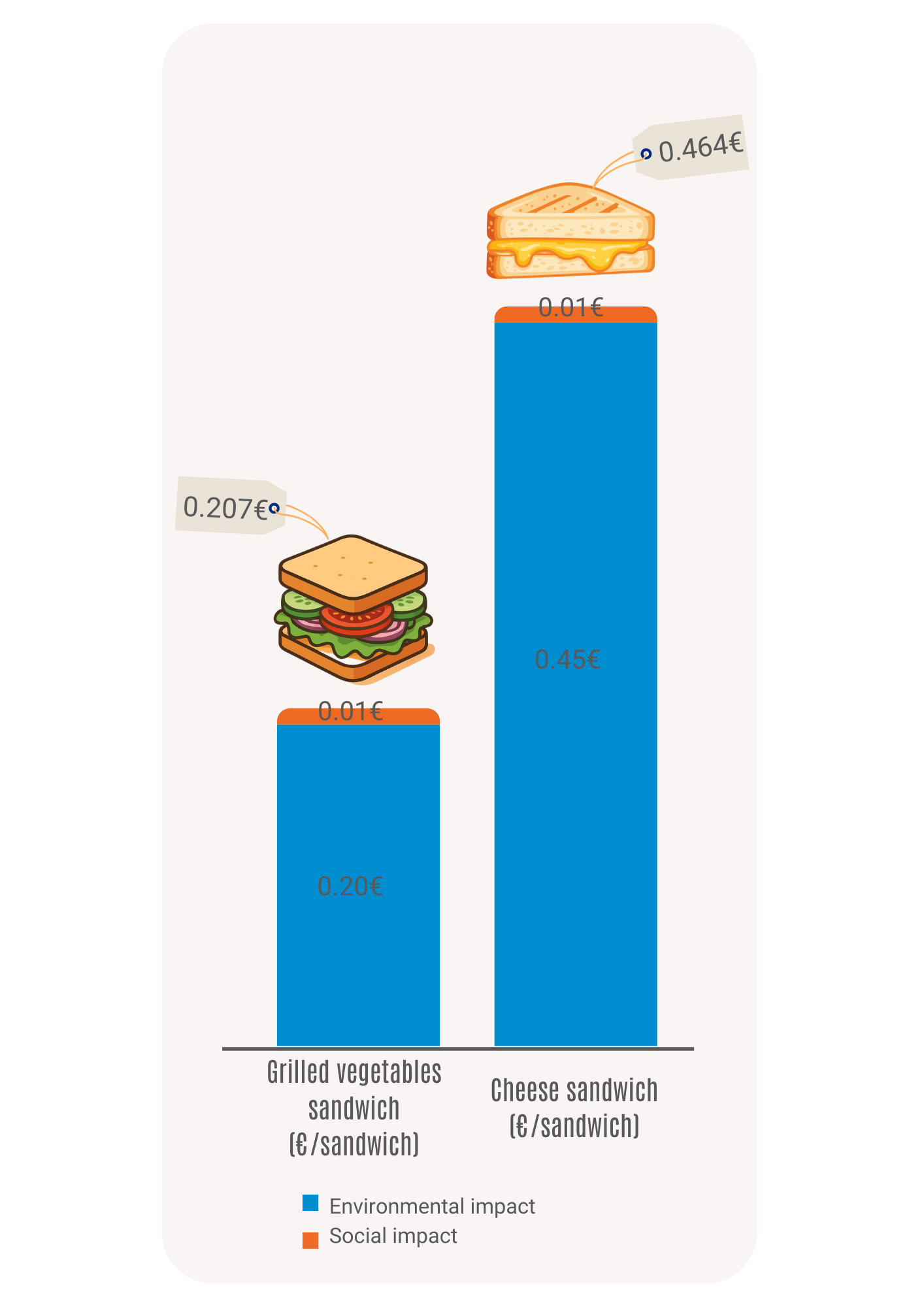
- Waldkorn roll, hummus, grilled vegetables
- Waldkorn roll, cheese, pesto, cucumber
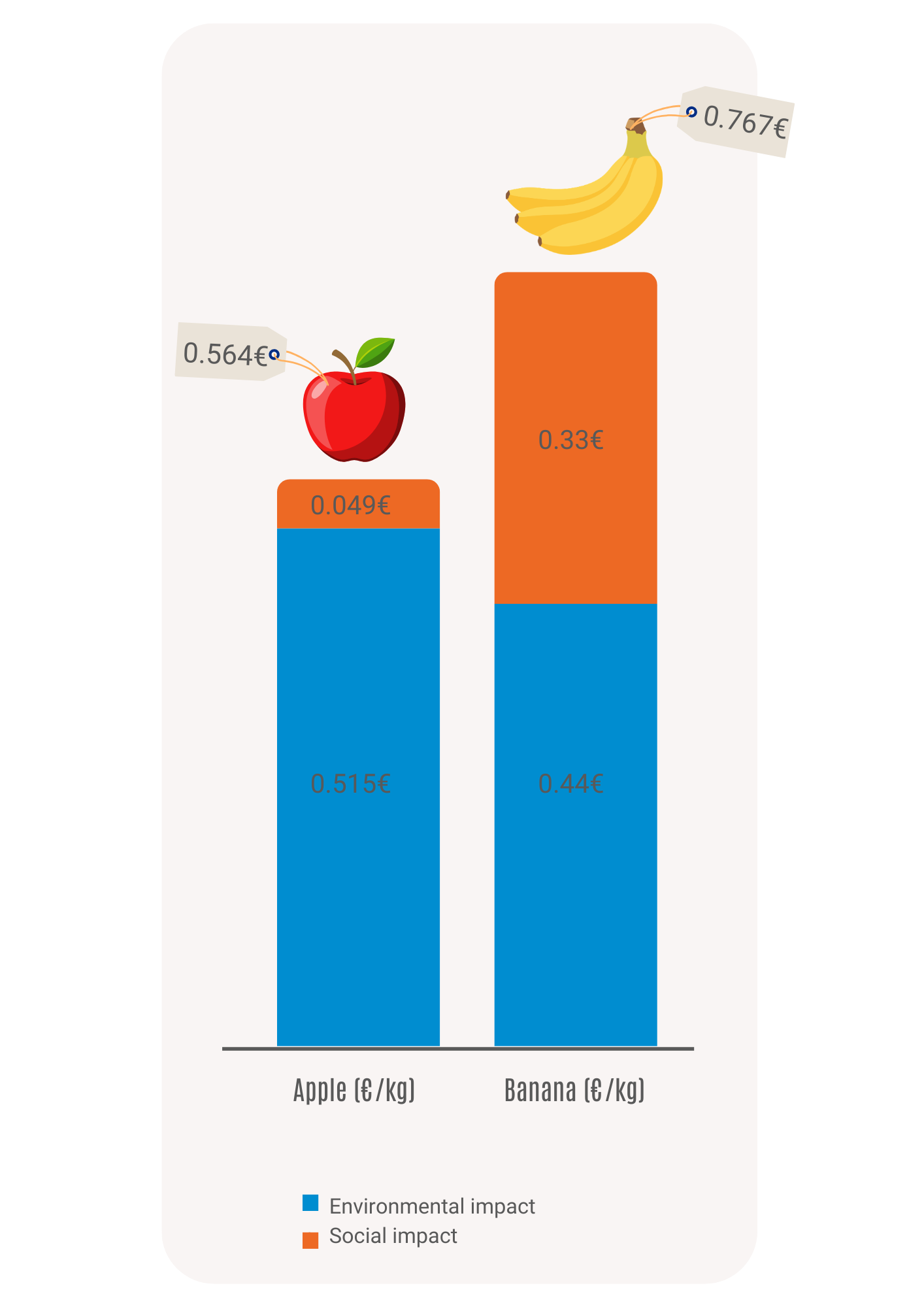
- Banana
- Apple
- Eggs
- Yoghurt
- Soy yoghurt
- Milk
- Oat milk
- Coffee
*Coffee from Brazil, Honduras, and Indonesia
Approach
How did we estimate the true price gaps?

Value Chain Steps
The calculations of the real prices relate to the following parts of the value chain per ingredient
- Raw materials
- Cultivation
- Sometimes: processing

Impacts
The estimates cover material parts of the value chain per stage
- Contribution to climate change
- Water consumption
- Land use
- Air pollution
- Water pollution
- Use of fossil fuels
- Underpayment
- Under-earning
- Child labour

Data
The calculations of the true price gap of the products are based on
- Secondary data collected by True Price
- Limited primary data on ingredients, countries of origin and weights collected by Vitam
- True Price monetisation factors
As with all research, the results have limitations. Feel free to check them at the end of this page.
The Results
The results of additional products will be uploaded as soon as they become available. Want to know more about the method, definitions and more? Take a look at our publications, such as ‘Monetisation factors for true pricing’ and ‘Valuation framework for true price assessments of agri-food products’, hier.
Good to know…
Review process
The assessment process in this project includes the process, scoping, modelling, data and reporting steps of a true price calculation, according to the True Price Assessment Method. One general validation round on the process and model was carried out by a team member not involved in the project.
All validation comments, questions and remarks were noted. They were processed by the project team. The processing was checked by the people who carried out the validation. All steps, choices and assumptions were discussed and approved by the partners involved.
Limitations of the results
These true price calculations have some limitations related to the scope of data applications and availability.
- Scope of the value chain: we measure the impact in specific, material steps of the value chain for each ingredient. Some steps, which may have a limited impact on the real price, are not included. For example, transport to the restaurant, packaging and restaurant activities are not part of the calculations.
- Focus on cultivation/production phase: for most food products, the greatest impact occurs during the cultivation phase. Therefore, these calculations focus on the cultivation phase. For most ingredients, transport to and energy consumption in regional distribution centres were included as standard in the contribution to climate change.
- Underpayment of farmers: with regard to the impact of underpayment, there is a lack of data on ingredients from outside Europe. Therefore, underpayment for ingredients from outside Europe has not been included.
- Data sources: in general, meta-analyses and larger data sets are preferred in order to optimise consistency, good data quality and mutual comparability. Due to the limited availability of data for products from some areas, different sources have been used for different products. As a result, complete comparability cannot be guaranteed.
- Not all data is the most recent data. As a result, it is possible that the most recent developments may impact the results.